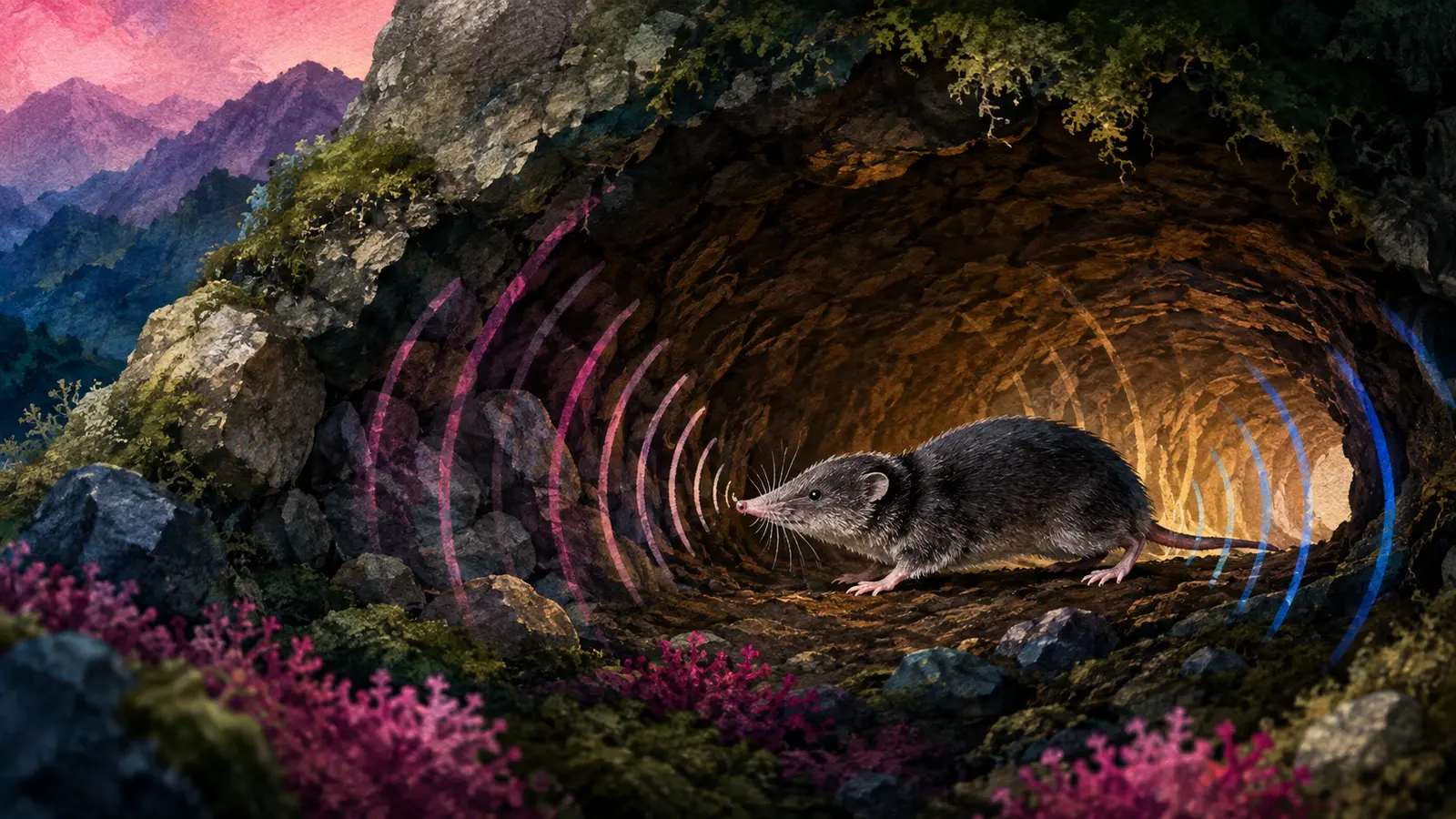
Echolocation is usually associated with bats and toothed whales. A team at the Kunming Institute of Zoology has now shown that Asian shrew moles also use sound and echo to orient themselves.
The animals are small, mostly hidden and unlike familiar bats. For research that matters: it suggests another independently evolved form of echolocation among mammals.
The team compared vocal data from almost a thousand mammal species. An inconspicuous animal from southwest China’s mountains has expanded a field that once seemed fairly tidy.
In brief
Echolocation means an animal produces sounds and evaluates the returning waves. It can reveal obstacles and structures when vision is of little help.
Why it matters
Among mammals, the ability is mainly linked to bats and toothed whales. If shrew moles use it too, similar solutions may have evolved independently.
A closer look
The team combined observations with a large comparison of vocal data from nearly a thousand mammal species. This is not a superpower but orientation in a cramped, dark habitat.
More facts
Shrew moles are very small, secretive mammals of Southeast Asia. Short, quiet calls can be more useful than strong vision under leaf litter, soil and dense vegetation.
How we know
This story is based on a publicly available original source.
Open the original source ↗