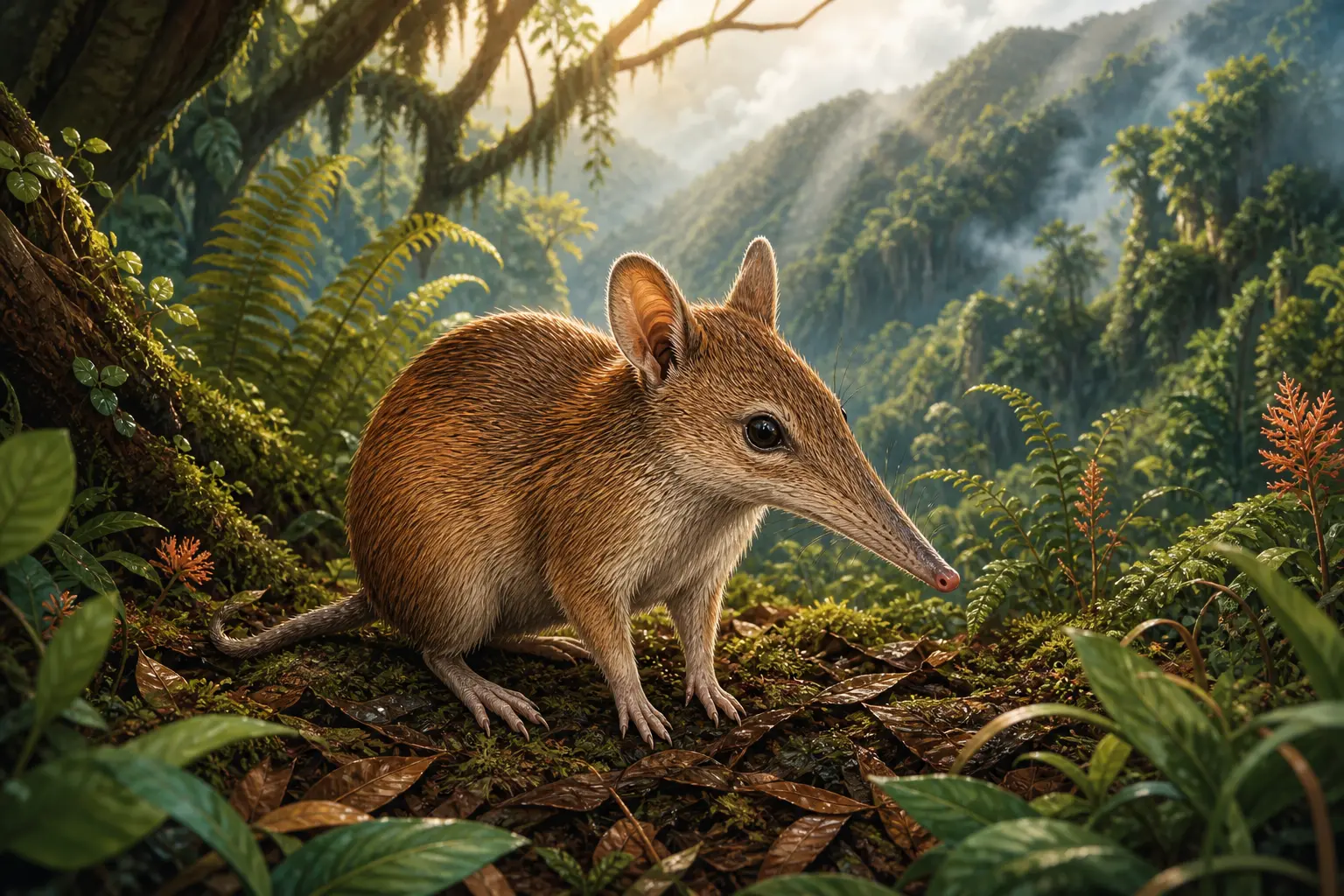
The animal is called Peroryctes trigonodon. It belongs to the long-nosed bandicoots, a group of small, ground-dwelling marsupials, and is only the third recognised species in its genus.
The decisive specimens had been collected years earlier in a remote mountain village in the Baliem Valley. Only a seven-year study showed that they differ clearly from known relatives.
It is the first new Peroryctes species described in around 100 years. The animals appear to come from a very small area, which also raises questions about their protection.
In brief
Peroryctes trigonodon is a small, ground-dwelling bandicoot from the remote Baliem Valley. Until now its genus contained only two recognised species.
Why it matters
The species was discovered not through a fresh sighting but by revisiting museum specimens. Collections can still reveal unknown species decades later.
A closer look
The study took seven years. DNA in the old specimens was too degraded to use, so the team carefully compared anatomical features; the differences were enough for a scientific description.
More facts
All known specimens come from one small part of the Baliem Valley, suggesting a restricted range and particular vulnerability to habitat change. Researchers estimate that up to 30% of New Guinea’s small mammal species may still be undescribed.
How we know
This story is based on a publicly available original source.
Open the original source ↗