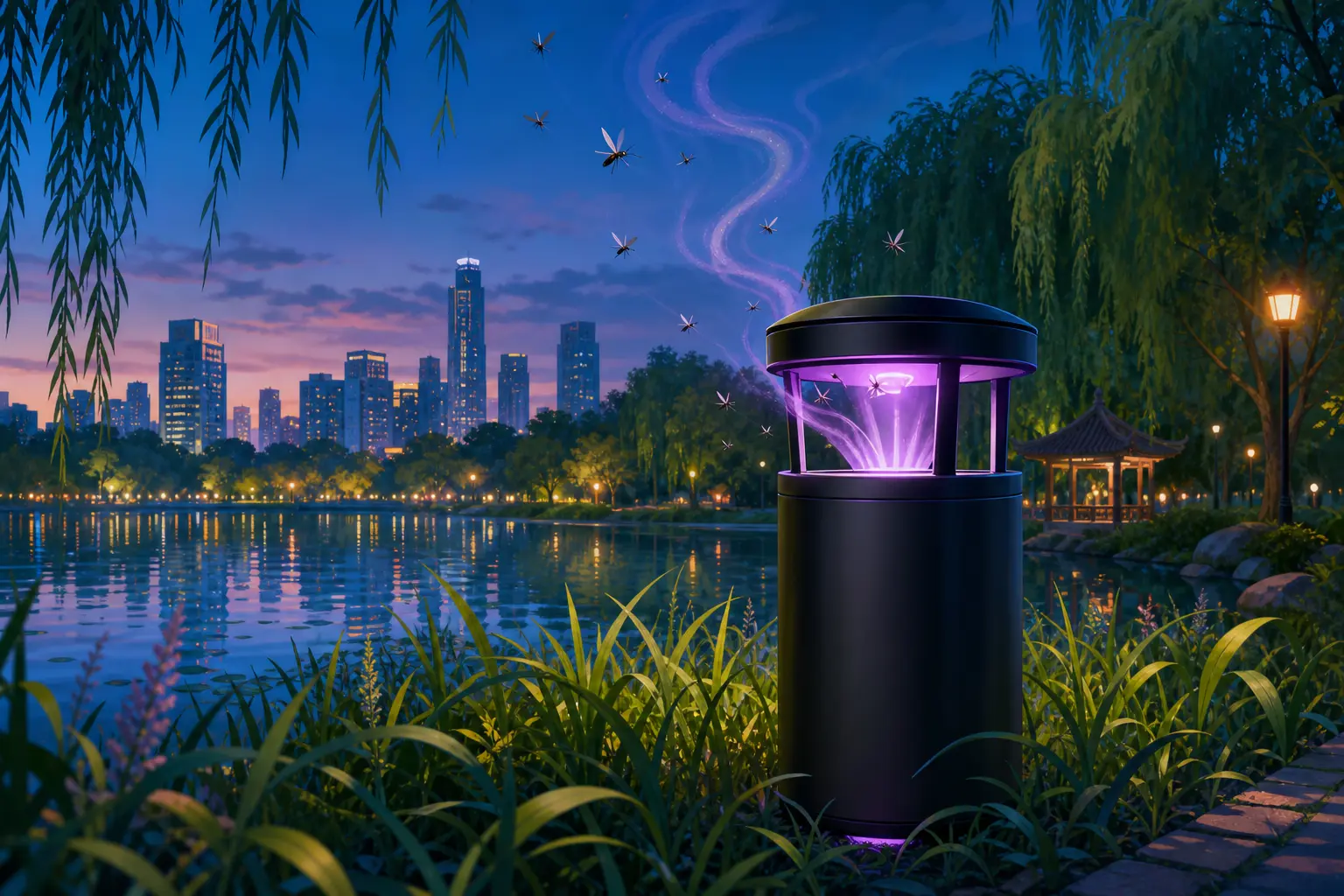
To fool mosquitoes, apparently you first have to exhale convincingly. Smart traps in Wuhan parks release carbon dioxide at a concentration that imitates human breath; light adds to the attraction.
The insects are drawn into a sealed container, while a display shows the catch count. According to Xinhua, ten devices were installed in especially damp, densely vegetated places in one district in July.
After a little more than 20 days, local authorities reported more than 70,000 mosquitoes caught. Other systems in China use AI to count and identify mosquitoes; a laser device can reportedly register individual insects within milliseconds.
In brief
For many biting mosquitoes, carbon dioxide signals a potential host. The traps imitate part of what people release when they breathe out.
Why it matters
These devices are not in a laboratory but in damp, densely vegetated parts of a city district. A simple attractant idea becomes a visible part of municipal pest control.
A closer look
A high catch count tells us only how many mosquitoes entered the traps. Whether it reduces disease or the overall population needs separate, longer-term study.
More facts
The pilot used ten devices in damp, overgrown areas and near playgrounds and cooling areas. Xinhua says each covers about 100 to 200 square metres. Suction pulls mosquitoes into a sealed container where they die through dehydration, without chemical sprays.
How we know
This story is based on a publicly available original source.
Open the original source ↗